 Eckhard Ranulf Walter
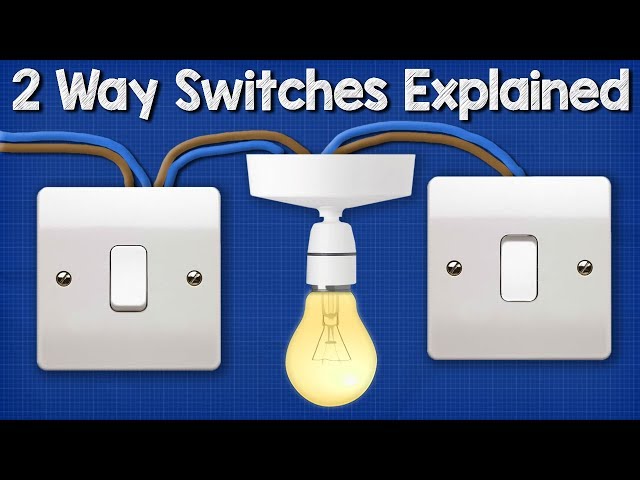
Wiring 2 Switches to One Light
Wiring two switches to one light is a common electrical task that can be completed in a few steps. By following a few simple guidelines, you can ensure that the job is done safely and correctly.
There are a few different ways to wire two switches to one light. The most common method is to use a three-way switch at one end of the light and a four-way switch at the other end. A second method is to use two three-way switches, one at each end of the light. There are also wireless options available, which can be easier to install but may not be as reliable.
Here are the steps for wiring two switches to one light using the most common method:
- Turn off the power to the light at the circuit breaker or fuse box.
- Remove the faceplate from the switch and unscrew the switch from the electrical box.
- Disconnect the wires from the switch. There will be two or three wires connected to the switch, depending on the type of switch.
- Connect the wires to the new switch. The wires should be connected to the same terminals on the new switch as they were on the old switch.
- Screw the new switch into the electrical box and replace the faceplate.
- Turn on the power to the light and test the switch to make sure it is working properly.
Here are some benefits of using charts and diagrams when wiring two switches to one light:
- Charts and diagrams can help you to visualize the wiring process, making it easier to understand.
- Charts and diagrams can help you to avoid mistakes, by providing a clear and concise guide to the wiring process.
- Charts and diagrams can help you to save time, by providing a quick and easy reference for the wiring process.
Overall, charts and diagrams can be a valuable tool when wiring two switches to one light. By following the steps outlined in this article, you can ensure that the job is done safely and correctly.
Wiring 2 Switches to One Light
Wiring two switches to one light is a common electrical task that can be completed in a few steps. By following a few simple guidelines, you can ensure that the job is done safely and correctly.
- Safety: Always turn off the power before starting any electrical work.
- Wiring: Use the correct type of wire for the job.
- Switches: Choose switches that are compatible with the type of light you are using.
- Connections: Make sure all connections are tight and secure.
- Testing: Test the switches to make sure they are working properly before turning on the power.
- Tools: Use the right tools for the job.
- Codes: Follow all applicable electrical codes.
By following these key aspects, you can ensure that your wiring job is done safely and correctly. Here are a few examples of how these aspects are interconnected:
- Using the correct type of wire is important for safety. If the wire is too small, it could overheat and cause a fire. If the wire is too large, it could be difficult to work with and could make the connections less secure.
- Choosing the right switches is important for both safety and functionality. If the switches are not compatible with the type of light you are using, they could damage the light or even cause a fire.
- Making sure all connections are tight and secure is important for both safety and functionality. Loose connections could cause the lights to flicker or even go out completely.
- Testing the switches before turning on the power is important for safety. This will help you to identify any problems with the wiring or the switches before they can cause any damage.
Overall, by following these key aspects, you can ensure that your wiring job is done safely and correctly.
Safety
Electrical work can be dangerous, and it is important to take precautions to avoid injury. One of the most important safety rules is to always turn off the power before starting any electrical work. This is especially important when working with lighting circuits, as there is a risk of electric shock if the power is not turned off.
-
Risk of electric shock
Electric shock is a serious hazard when working with electricity. It can cause serious injury or even death. Turning off the power before starting any electrical work helps to prevent electric shock by ensuring that there is no current flowing through the circuit.
-
Fire hazard
Electrical fires are another serious hazard. They can start if there is a short circuit or if the wiring is overloaded. Turning off the power before starting any electrical work helps to prevent electrical fires by ensuring that there is no power flowing through the circuit.
-
Damage to equipment
Electrical equipment can be damaged if it is not properly disconnected from the power supply before work is started. Turning off the power before starting any electrical work helps to prevent damage to equipment by ensuring that there is no power flowing through the circuit.
-
Compliance with electrical codes
In most areas, it is required by electrical codes to turn off the power before starting any electrical work. This is to help ensure the safety of both the person doing the work and anyone else who may be in the area.
Turning off the power before starting any electrical work is a simple and effective way to help prevent injury, fire, and damage to equipment. It is an important safety rule that should always be followed.
Wiring
When wiring 2 switches to one light, it is important to use the correct type of wire for the job. The type of wire you need will depend on the amperage of the light and the length of the wire run. Using the wrong type of wire can lead to safety hazards, such as overheating and fire.
-
Wire gauge
The wire gauge is a measure of the thickness of the wire. The thicker the wire, the lower the gauge number. For wiring 2 switches to one light, you will typically need to use 14-gauge wire or 12-gauge wire. 14-gauge wire is sufficient for most lighting applications, but 12-gauge wire is recommended for longer wire runs or for higher amperage lights.
-
Wire insulation
The wire insulation is the material that surrounds the wire and protects it from damage. For wiring 2 switches to one light, you will typically need to use wire with PVC insulation. PVC insulation is resistant to heat and moisture, making it a good choice for most indoor applications.
-
Wire color
The wire color is not as important as the wire gauge and insulation, but it can be helpful to use different colored wires for different purposes. For example, you could use black wire for the hot wire, white wire for the neutral wire, and green wire for the ground wire.
By using the correct type of wire for the job, you can help to ensure the safety and reliability of your wiring installation.
Switches
When wiring 2 switches to one light, it is important to choose switches that are compatible with the type of light you are using. This is because different types of lights require different types of switches.
-
Incandescent lights
Incandescent lights are the most common type of light bulb. They are relatively inexpensive and easy to install. Incandescent lights can be used with any type of switch, but they are not the most energy efficient option.
-
Fluorescent lights
Fluorescent lights are more energy efficient than incandescent lights. They are also longer lasting. Fluorescent lights require a special type of switch called a ballast. Ballasts regulate the flow of electricity to the fluorescent light.
-
LED lights
LED lights are the most energy efficient type of light bulb. They are also the longest lasting. LED lights can be used with any type of switch, but they require a special type of driver. Drivers regulate the flow of electricity to the LED light.
It is important to choose the right type of switch for the type of light you are using. Using the wrong type of switch can damage the light or even cause a fire.
Connections
When wiring 2 switches to one light, it is important to make sure that all connections are tight and secure. Loose connections can cause a number of problems, including:
-
Flickering lights
Loose connections can cause the lights to flicker or even go out completely.
-
Overheating
Loose connections can cause the wires to overheat, which can damage the wires and the insulation. In some cases, overheating can even lead to a fire.
-
Electrical shock
Loose connections can create a shock hazard. If you touch a loose connection, you could be shocked.
To ensure that all connections are tight and secure, follow these steps:
- Use the correct size wire nuts. Wire nuts are used to connect wires together. Make sure that you use the correct size wire nuts for the gauge of wire that you are using.
- Twist the wires together clockwise. When you twist the wires together, make sure that you twist them clockwise. This will help to ensure that the connection is secure.
- Tighten the wire nuts. Once you have twisted the wires together, tighten the wire nuts until they are snug. Do not overtighten the wire nuts, as this can damage the wires.
By following these steps, you can help to ensure that all connections are tight and secure. This will help to prevent problems such as flickering lights, overheating, and electrical shock.
Testing
Testing the switches before turning on the power is an important step in wiring 2 switches to one light. This step helps to ensure that the switches are working properly and that there are no problems with the wiring.
There are a few different ways to test the switches. One way is to use a multimeter to check for continuity between the terminals on the switch. Another way is to simply turn on the power and see if the light turns on and off when the switches are flipped.
It is important to test the switches before turning on the power because a problem with the wiring or the switches could cause a fire or an electrical shock. By testing the switches before turning on the power, you can help to prevent these hazards.
Here is an example of how testing the switches can help to prevent a fire:
- If one of the switches is not wired properly, it could cause the wire to overheat and start a fire.
- If one of the switches is faulty, it could cause the light to stay on even when the switch is turned off. This could also cause the wire to overheat and start a fire.
By testing the switches before turning on the power, you can help to prevent these hazards and ensure that the wiring is safe.
Tools
When wiring 2 switches to one light, it is important to use the right tools for the job. Using the wrong tools can make the job more difficult, time-consuming, and even dangerous.
For example, trying to strip the insulation off of wires with a pair of scissors instead of a wire stripper can damage the wires and make them unsafe to use. Or, trying to tighten a screw with a pair of pliers instead of a screwdriver can strip the screw and make it difficult to remove later.
Using the right tools for the job is essential for completing any electrical work safely and efficiently. Here is a list of some of the basic tools that you will need for wiring 2 switches to one light:
- Wire strippers
- Screwdriver
- Pliers
- Electrical tape
- Wire nuts
- Voltage tester
By using the right tools for the job, you can help to ensure that your electrical work is done safely and correctly.
Codes
Electrical codes are important safety regulations that are in place to protect people from electrical hazards. These codes are developed by experts and are based on years of experience and research.
When wiring 2 switches to one light, it is important to follow all applicable electrical codes. This is because electrical work can be dangerous if it is not done properly. By following electrical codes, you can help to ensure that your electrical work is safe and up to code.
There are many different electrical codes that apply to wiring 2 switches to one light. Some of the most important codes include:
- The National Electrical Code (NEC) is a set of electrical safety standards that are used in the United States. The NEC is published by the National Fire Protection Association (NFPA).
- The Canadian Electrical Code (CEC) is a set of electrical safety standards that are used in Canada. The CEC is published by the Canadian Standards Association (CSA).
- Local electrical codes may also apply. These codes are typically adopted by local governments and may vary from one jurisdiction to another.
It is important to be aware of all applicable electrical codes before starting any electrical work. You can find more information about electrical codes by visiting the websites of the NFPA and the CSA.
Following electrical codes is not only important for safety, but it can also help you to avoid costly mistakes. If your electrical work is not up to code, you may be required to make expensive repairs or even have your work redone.
By following electrical codes, you can help to ensure that your electrical work is safe, up to code, and done correctly the first time.
Wiring two switches to one light is an electrical configuration that allows for the control of a single light fixture from two different locations. This setup is commonly used in hallways, stairwells, and other areas where it is desirable to have multiple points of control for a light.
There are several benefits to wiring two switches to one light. First, it provides added convenience, as it allows users to turn the light on or off from either location. Second, it can improve safety, as it allows users to turn off the light from a safe location in the event of an emergency. Third, it can help to save energy, as it allows users to turn off the light when they are not in the room.
Wiring two switches to one light is a relatively simple process that can be completed in a few steps. First, the power to the light fixture must be turned off at the circuit breaker or fuse box. Next, the existing switch or switches must be removed from the electrical box. The new switches must then be wired according to the manufacturer’s instructions. Finally, the power can be turned back on and the new switches can be tested to ensure that they are working properly.
FAQs
Wiring two switches to one light is a common electrical task that can be completed in a few steps. However, there are several common questions that people have about this process. Here are the answers to some of the most frequently asked questions:
Question 1: What type of wire should I use?
Answer: The type of wire you use will depend on the amperage of the light and the length of the wire run. For most lighting applications, 14-gauge wire or 12-gauge wire is sufficient.
Question 2: What type of switches should I use?
Answer: The type of switches you use will depend on the type of light you are using. Incandescent lights can be used with any type of switch, but fluorescent lights and LED lights require special types of switches.
Question 3: How do I wire the switches?
Answer: The specific wiring instructions will vary depending on the type of switches you are using. However, in general, you will need to connect the hot wire to the common terminal on each switch, and then connect the load wire to the other terminal on each switch.
Question 4: Do I need to use a junction box?
Answer: Yes, you will need to use a junction box to connect the wires from the two switches to the wires from the light fixture.
Question 5: How do I test the switches?
Answer: Once you have wired the switches, you can test them by turning on the power and flipping the switches. The light should turn on and off when you flip the switches.
Question 6: What should I do if the switches don’t work?
Answer: If the switches don’t work, you should first check to make sure that the power is turned on. If the power is on, then you should check the wiring to make sure that it is correct. If the wiring is correct, then you may need to replace the switches.
Summary of key takeaways or final thought:Wiring two switches to one light is a relatively simple process that can be completed in a few steps. By following the instructions in this FAQ, you can safely and easily wire two switches to one light.
Transition to the next article section:Now that you know how to wire two switches to one light, you can use this knowledge to improve the convenience and safety of your home.
Conclusion
Wiring two switches to one light is a common electrical task that can be completed in a few steps. By following the steps outlined in this article, you can safely and easily wire two switches to one light. This will allow you to control a single light fixture from two different locations, which can be convenient, safe, and energy-efficient.
In addition to the benefits listed above, wiring two switches to one light can also be a great way to improve the aesthetics of your home. By adding a second switch, you can create a more balanced and symmetrical look. You can also use different types of switches to match the dcor of your home.
If you are not comfortable wiring two switches to one light yourself, you can always hire a qualified electrician to do the job for you. However, if you are confident in your abilities, wiring two switches to one light is a relatively simple project that can be completed in a few hours.
Youtube Video: