 Eckhard Ranulf Walter
Wiring 2 Switches to 1 Light
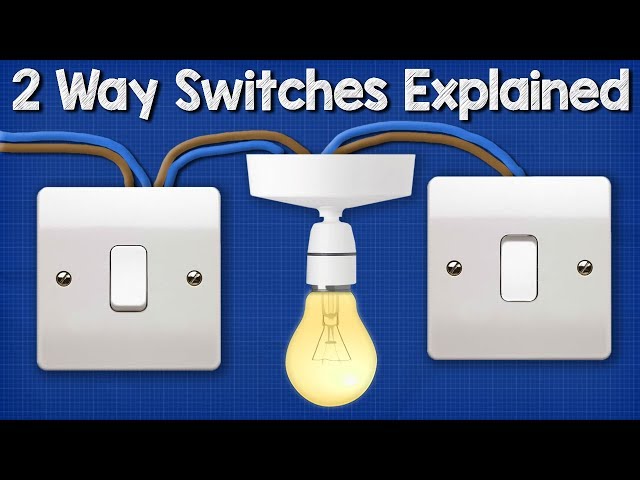
Wiring two switches to one light is a common electrical task that can be completed in a few simple steps. This type of wiring is often used to control a light from two different locations, such as a hallway or stairwell. There are two main types of wiring diagrams for this task: the single-pole, double-throw (SPDT) switch and the three-way switch. In this article, we will provide you with step-by-step instructions on how to wire both types of switches.
SPDT Switch Wiring Diagram
- Step 1: Turn off the power to the light fixture at the circuit breaker panel.
- Step 2: Remove the faceplate from the switch box.
- Step 3: Disconnect the wires from the old switch.
- Step 4: Connect the black wire from the power source to the common terminal on the new SPDT switch.
- Step 5: Connect the red wire from the light fixture to one of the other terminals on the SPDT switch.
- Step 6: Connect the white wire from the light fixture to the remaining terminal on the SPDT switch.
- Step 7: Install the new switch in the switch box and secure it with screws.
- Step 8: Turn on the power at the circuit breaker panel and test the switch.
Three-Way Switch Wiring Diagram
- Step 1: Turn off the power to the light fixture at the circuit breaker panel.
- Step 2: Remove the faceplate from the switch boxes.
- Step 3: Disconnect the wires from the old switches.
- Step 4: Identify the common wire (usually black or red) and connect it to the common terminal on both three-way switches.
- Step 5: Connect the traveler wires (usually white or blue) from one switch to the traveler terminals on the other switch.
- Step 6: Connect the wires from the light fixture to the remaining terminals on both three-way switches.
- Step 7: Install the new switches in the switch boxes and secure them with screws.
- Step 8: Turn on the power at the circuit breaker panel and test the switches.
Benefits of Wiring 2 Switches to 1 Light
- Convenience: Wiring two switches to one light allows you to control the light from two different locations, which is convenient for large rooms or hallways.
- Safety: This type of wiring can improve safety by providing multiple ways to turn off the light in an emergency.
- Energy efficiency: Wiring two switches to one light can help to save energy by allowing you to turn off the light when you leave a room.
Conclusion
Wiring two switches to one light is a relatively simple task that can be completed in a few simple steps. By following the instructions in this article, you can easily wire a SPDT switch or a three-way switch to control a light from two different locations.
Wiring 2 Switches to 1 Light
Wiring two switches to one light is a common electrical task that can be completed in a few simple steps. There are several key aspects to consider when wiring 2 switches to 1 light:
- Safety: It is important to ensure that all electrical work is done safely. This includes turning off the power at the circuit breaker panel before beginning any work.
- Wiring Diagram: There are two main types of wiring diagrams for wiring 2 switches to 1 light: the single-pole, double-throw (SPDT) switch and the three-way switch.
- SPDT Switch: A SPDT switch is a type of switch that has two positions and three terminals. It is commonly used to control a light from one location.
- Three-Way Switch: A three-way switch is a type of switch that has three positions and six terminals. It is commonly used to control a light from two locations.
- Convenience: Wiring two switches to one light can be convenient, as it allows you to control the light from multiple locations.
- Energy Efficiency: Wiring two switches to one light can help to save energy, as it allows you to turn off the light when you leave a room.
These are just a few of the key aspects to consider when wiring 2 switches to 1 light. By following the instructions in this article and taking the necessary safety precautions, you can easily complete this task yourself.
Safety
When it comes to wiring 2 switches to 1 light, safety is of paramount importance. Electrical work can be dangerous if not done properly, so it is essential to take the necessary precautions to avoid injury or damage to property.
- Understanding the Circuit: Before beginning any work, it is important to understand the electrical circuit that you will be working on. This includes identifying the power source, the switch locations, and the light fixture. Once you have a clear understanding of the circuit, you can begin to plan your work.
- Turning Off the Power: The most important safety precaution you can take is to turn off the power at the circuit breaker panel before beginning any work. This will prevent you from being shocked or electrocuted.
- Using Proper Tools and Materials: It is important to use the proper tools and materials for the job. This includes using insulated tools, wearing gloves, and using the correct wire gauge for the circuit. Using the wrong tools or materials can increase the risk of injury or damage to property.
- Following the Wiring Diagram: When wiring 2 switches to 1 light, it is important to follow the wiring diagram carefully. This will ensure that the switches are wired correctly and that the light fixture is properly connected.
By following these safety precautions, you can help to ensure that your electrical work is done safely and correctly.
Wiring Diagram
A wiring diagram is a simplified representation of an electrical circuit. It shows the components of the circuit and how they are connected together. When wiring 2 switches to 1 light, it is important to use the correct wiring diagram for the type of switch you are using. The two main types of wiring diagrams for this task are the SPDT switch and the three-way switch.
SPDT Switch Wiring Diagram
A SPDT switch is a type of switch that has two positions and three terminals. It is commonly used to control a light from one location. The SPDT switch wiring diagram shows how to connect the switch to the power source, the light fixture, and the ground wire.
Three-Way Switch Wiring Diagram
A three-way switch is a type of switch that has three positions and six terminals. It is commonly used to control a light from two locations. The three-way switch wiring diagram shows how to connect the switch to the power source, the light fixture, and the ground wire.
Importance of Wiring Diagram
Using the correct wiring diagram is essential for wiring 2 switches to 1 light. If the wiring diagram is incorrect, the light may not work properly or it may even pose a safety hazard. By following the correct wiring diagram, you can ensure that the light is wired safely and correctly.
Practical Significance
Wiring 2 switches to 1 light is a common electrical task that can be completed in a few simple steps. By following the correct wiring diagram, you can easily complete this task yourself and save money on hiring an electrician.
Conclusion
Wiring 2 switches to 1 light is a relatively simple task, but it is important to use the correct wiring diagram. By following the instructions in this article, you can easily wire 2 switches to 1 light and save money on hiring an electrician.
SPDT Switch
A SPDT switch is a key component in wiring 2 switches to 1 light. It is used to control the light from one location. The SPDT switch has two positions, which allow it to turn the light on or off. It also has three terminals, which are used to connect the switch to the power source, the light fixture, and the ground wire.
When wiring 2 switches to 1 light, it is important to use a SPDT switch at each location. This will allow you to control the light from either location. If you only use one SPDT switch, you will only be able to control the light from one location.
SPDT switches are relatively easy to install and wire. They are a good choice for controlling lights from multiple locations.
Practical Significance
Wiring 2 switches to 1 light is a common electrical task that can be completed in a few simple steps. By following the correct wiring diagram and using the correct components, you can easily complete this task yourself and save money on hiring an electrician.
Understanding the connection between SPDT switches and wiring 2 switches to 1 light is important for completing this task safely and correctly.
Conclusion
SPDT switches are an essential component in wiring 2 switches to 1 light. By understanding the connection between SPDT switches and wiring 2 switches to 1 light, you can easily complete this task yourself and save money on hiring an electrician.
Three-Way Switch
A three-way switch is a key component in wiring 2 switches to 1 light. It is used to control the light from two locations. The three-way switch has three positions, which allow it to turn the light on, off, or to a dimmed setting. It also has six terminals, which are used to connect the switch to the power source, the light fixture, and the ground wire.
When wiring 2 switches to 1 light, it is important to use a three-way switch at each location. This will allow you to control the light from either location. If you only use one three-way switch, you will only be able to control the light from one location.
Three-way switches are relatively easy to install and wire. They are a good choice for controlling lights from multiple locations.
Practical Significance
Wiring 2 switches to 1 light is a common electrical task that can be completed in a few simple steps. By following the correct wiring diagram and using the correct components, you can easily complete this task yourself and save money on hiring an electrician.
Understanding the connection between three-way switches and wiring 2 switches to 1 light is important for completing this task safely and correctly.
Conclusion
Three-way switches are an essential component in wiring 2 switches to 1 light. By understanding the connection between three-way switches and wiring 2 switches to 1 light, you can easily complete this task yourself and save money on hiring an electrician.
Convenience
Wiring two switches to one light can provide significant convenience in various settings. By having multiple control points for a single light fixture, it eliminates the need to manually walk to the light switch location to turn it on or off.
Imagine a bedroom with a light switch near the entrance and another switch by the bedside. This setup allows you to turn off the light conveniently from your bed without having to get up and walk to the door. Similarly, in a hallway or staircase, having switches at both ends provides easy control of the light, enhancing safety and comfort.
The convenience factor is particularly beneficial in larger spaces, such as living rooms, where multiple seating areas or entry points may be present. Wiring two switches to one light ensures that the light can be controlled from different parts of the room, eliminating the hassle of reaching a single switch location.
Furthermore, in outdoor areas, such as patios or gardens, having multiple switches for a single light fixture can provide added convenience and safety. It allows for easy control of lighting from different access points, making it easier to navigate in the dark and enhancing security.
In summary, the convenience provided by wiring two switches to one light is a key aspect of its practicality. It offers greater control, flexibility, and ease of use, making it a valuable feature in various residential, commercial, and outdoor settings.
Energy Efficiency
Wiring two switches to one light offers a simple yet effective way to enhance energy efficiency in various settings. By providing multiple control points for a single light fixture, it empowers individuals to conveniently turn off the light when leaving a room, reducing unnecessary energy consumption.
- Convenience and Habit Formation: Having multiple switches for a single light makes it easier to turn off the light when leaving a room, encouraging energy-saving habits. This convenience factor is particularly beneficial in frequently used areas, such as hallways, stairways, and bedrooms.
- Improved Control and Flexibility: Multiple switches provide greater control over lighting, allowing users to turn off the light from the most convenient location. This eliminates the need to walk back to the light switch near the entrance, reducing the likelihood of leaving the light on unintentionally.
- Energy Savings in Shared Spaces: In shared spaces, such as living rooms and offices, multiple switches promote energy conservation by enabling individuals to turn off the light when they leave a particular area of the room. This prevents the light from being left on unnecessarily when only a portion of the space is occupied.
- Environmental Impact: The energy savings achieved through wiring two switches to one light contribute positively to environmental sustainability. By reducing energy consumption, this practice helps conserve natural resources and minimize greenhouse gas emissions.
In conclusion, wiring two switches to one light not only enhances convenience but also promotes energy efficiency by providing multiple control points for a single light fixture. This simple yet effective solution empowers individuals to reduce energy waste and contribute to a more sustainable lifestyle.
Wiring 2 Switches to 1 Light involves connecting two electrical switches to control a single light fixture. This configuration allows for convenient light control from multiple locations within a room or space.
This electrical setup offers several benefits. Firstly, it enhances convenience by providing multiple access points to turn the light on or off. This is particularly useful in larger rooms, hallways, or stairwells where reaching a single switch may be inconvenient. Secondly, it improves safety, especially in areas where darkness can pose a hazard. Having multiple switches ensures that the light can be easily activated or deactivated regardless of one’s location.
Historically, wiring 2 switches to 1 light was primarily implemented using three-way switches. However, advancements in electrical technology have introduced various switch types and wiring methods that offer greater flexibility and functionality. Today, this configuration can be achieved using single-pole, double-throw (SPDT) switches, momentary switches, and even wireless or smart switches.
FAQs on Wiring 2 Switches to 1 Light
This section addresses common questions and provides clear answers to help enhance your understanding of wiring 2 switches to 1 light.
Question 1: What are the advantages of wiring 2 switches to 1 light?
Wiring 2 switches to 1 light offers several benefits, including increased convenience, improved safety, and greater flexibility in controlling lighting.
Question 2: What types of switches can be used for this configuration?
Traditionally, three-way switches were used. However, advancements in electrical technology have introduced various switch types that can be employed, including SPDT switches, momentary switches, and smart switches.
Question 3: Is it difficult to wire 2 switches to 1 light?
With proper preparation and adherence to safety guidelines, wiring 2 switches to 1 light is a manageable task for individuals with basic electrical knowledge. However, it is always advisable to consult a qualified electrician if you are unsure or uncomfortable.
Question 4: What safety precautions should be taken when wiring 2 switches to 1 light?
Electrical work requires caution. Ensure that the power is turned off at the circuit breaker before commencing any wiring. Use insulated tools, wear appropriate safety gear, and adhere to established electrical codes.
Question 5: How can I troubleshoot a wiring issue if the light doesn’t turn on?
If the light fails to illuminate, check the following: power supply, proper switch connections, and continuity of the circuit. Use a multimeter or voltage tester to identify any breaks or faults in the wiring.
Question 6: Are there any energy-saving benefits to wiring 2 switches to 1 light?
Yes, this configuration can contribute to energy savings. By providing multiple control points, it encourages turning off lights when leaving a room, reducing unnecessary energy consumption.
Summary
Wiring 2 switches to 1 light is a practical electrical solution that offers convenience, safety, and energy efficiency. Understanding the different switch types, wiring techniques, and safety guidelines will empower you to successfully implement this configuration in your home or workspace.
Next Section: Wiring Techniques for 2 Switches to 1 Light
Conclusion on Wiring 2 Switches to 1 Light
In summary, wiring 2 switches to 1 light is a practical and beneficial electrical configuration that enhances convenience, safety, and energy efficiency. Understanding the various switch types, wiring techniques, and safety guidelines outlined in this article will provide you with the necessary knowledge to successfully implement this configuration in your home or workspace.
The ability to control lighting from multiple locations offers increased convenience and flexibility, particularly in larger spaces or areas where multiple access points are desirable. This configuration is also crucial for safety, especially in areas where darkness can pose a hazard. Furthermore, by promoting the habit of turning off lights when leaving a room, this setup contributes to energy conservation and environmental sustainability.
Youtube Video: