 Eckhard Ranulf Walter
Trailer Harness Wiring Diagram
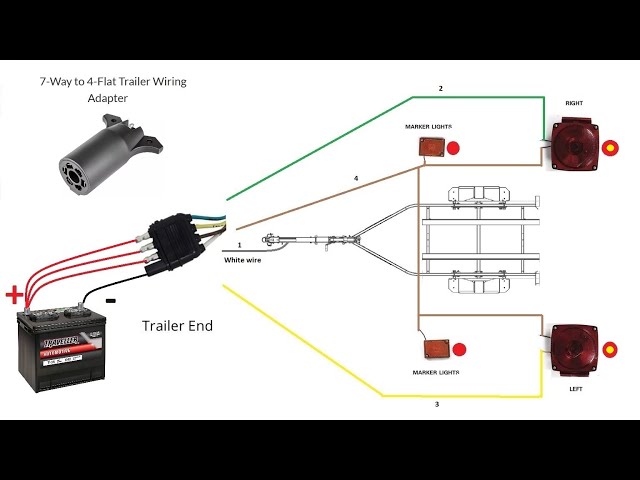
A trailer harness wiring diagram is a schematic diagram that shows how the electrical system of a tow vehicle is connected to the electrical system of a trailer. It is important to have a wiring diagram when installing a trailer hitch and wiring harness, as it will help to ensure that the electrical systems of the two vehicles are properly connected. Wiring diagrams can be found in the owner’s manuals of both the tow vehicle and the trailer, or they can be purchased from a variety of online sources.
There are a few different types of trailer harness wiring diagrams, but the most common type is the 4-wire flat connector. This type of connector has four wires: a white wire for ground, a yellow wire for left turn/brake, a green wire for right turn/brake, and a red wire for taillights.
To create a trailer harness wiring diagram, you will need to gather the following information:
- The year, make, and model of your tow vehicle
- The year, make, and model of your trailer
- The type of trailer hitch you are using
- The type of trailer wiring harness you are using
Once you have gathered this information, you can begin to create your wiring diagram. The first step is to draw a simple sketch of the electrical system of your tow vehicle. Then, draw a sketch of the electrical system of your trailer. Finally, connect the two sketches together using the wiring harness.
Once you have created a wiring diagram, you can use it to help you install your trailer hitch and wiring harness. By following the diagram, you can ensure that the electrical systems of your two vehicles are properly connected.
Benefits of using a trailer harness wiring diagram:
- Ensures that the electrical systems of your tow vehicle and trailer are properly connected
- Helps to prevent electrical problems
- Makes it easier to troubleshoot electrical problems
- Can save you time and money
Conclusion:
Trailer harness wiring diagrams are an important tool for anyone who tows a trailer. By following the steps outlined in this article, you can create a wiring diagram that will help you to safely and easily connect the electrical systems of your tow vehicle and trailer.
Essential Aspects of Trailer Harness Wiring Diagrams
Trailer harness wiring diagrams are an essential tool for anyone who tows a trailer. They provide a visual representation of how the electrical systems of the tow vehicle and trailer are connected. This information is critical for ensuring that the two systems are properly connected and functioning safely.
- Purpose: Trailer harness wiring diagrams show how to connect the electrical systems of a tow vehicle and trailer.
- Components: The main components of a trailer harness wiring diagram are the tow vehicle connector, the trailer connector, and the wires that connect them.
- Types: There are different types of trailer harness wiring diagrams, depending on the type of tow vehicle and trailer.
- Installation: Trailer harness wiring diagrams are used to help install trailer hitches and wiring harnesses.
- Troubleshooting: Trailer harness wiring diagrams can be used to troubleshoot electrical problems between the tow vehicle and trailer.
- Safety: Properly connecting the electrical systems of the tow vehicle and trailer is essential for safety.
- Convenience: Trailer harness wiring diagrams make it easier to connect and disconnect trailers.
These seven key aspects provide a comprehensive overview of the essential elements of trailer harness wiring diagrams. By understanding these aspects, you can ensure that your trailer is properly connected and functioning safely.
Purpose
The purpose of a trailer harness wiring diagram is to provide a visual representation of how the electrical systems of a tow vehicle and trailer are connected. This information is critical for ensuring that the two systems are properly connected and functioning safely.
Trailer harness wiring diagrams are an essential component of any trailer towing system. Without a wiring diagram, it would be very difficult to connect the electrical systems of the tow vehicle and trailer correctly. This could lead to a number of problems, including electrical shorts, fires, and even accidents.
Trailer harness wiring diagrams are typically included in the owner’s manuals of both the tow vehicle and the trailer. However, they can also be purchased from a variety of online sources. If you are unsure about how to connect the electrical systems of your tow vehicle and trailer, it is always best to consult a qualified electrician.
Here are some real-life examples of how trailer harness wiring diagrams can be used:
- To connect the taillights, brake lights, and turn signals of the trailer to the electrical system of the tow vehicle
- To connect the electric brakes of the trailer to the electrical system of the tow vehicle
- To connect the battery of the trailer to the charging system of the tow vehicle
Understanding the purpose of trailer harness wiring diagrams is essential for ensuring that your trailer is properly connected and functioning safely. By following the steps outlined in the wiring diagram, you can avoid electrical problems and ensure that your trailer is ready to hit the road.
Components
Trailer harness wiring diagrams are essential for connecting the electrical systems of a tow vehicle and trailer. The main components of a trailer harness wiring diagram are the tow vehicle connector, the trailer connector, and the wires that connect them.
- Tow Vehicle Connector: The tow vehicle connector is the part of the wiring harness that plugs into the electrical system of the tow vehicle. It typically has a 4-pin or 7-pin connector, depending on the type of trailer being towed.
- Trailer Connector: The trailer connector is the part of the wiring harness that plugs into the electrical system of the trailer. It typically has a 4-pin or 7-pin connector, depending on the type of trailer being towed.
- Wires: The wires that connect the tow vehicle connector to the trailer connector are typically color-coded to make it easy to identify which wire goes where. The most common wire colors are white (ground), yellow (left turn/brake), green (right turn/brake), and red (taillights).
These three components work together to provide a safe and reliable electrical connection between the tow vehicle and trailer. By understanding the function of each component, you can ensure that your trailer is properly connected and functioning safely.
Types
Trailer harness wiring diagrams are essential for connecting the electrical systems of a tow vehicle and trailer. However, there are different types of trailer harness wiring diagrams, depending on the type of tow vehicle and trailer.
The most common type of trailer harness wiring diagram is the 4-pin flat connector. This type of connector is typically used for small trailers, such as utility trailers and boat trailers. It has four wires: a white wire for ground, a yellow wire for left turn/brake, a green wire for right turn/brake, and a red wire for taillights.
For larger trailers, such as travel trailers and fifth wheels, a 7-pin round connector is typically used. This type of connector has seven wires: a white wire for ground, a yellow wire for left turn/brake, a green wire for right turn/brake, a red wire for taillights, a blue wire for electric brakes, a black wire for battery charge, and a purple wire for auxiliary power.
In addition to the 4-pin flat connector and the 7-pin round connector, there are also other types of trailer harness wiring diagrams, such as the 5-pin flat connector and the 6-pin round connector. These types of connectors are typically used for specific types of trailers, such as boat trailers and RV trailers.
It is important to use the correct type of trailer harness wiring diagram for your tow vehicle and trailer. Using the wrong type of wiring diagram can lead to electrical problems, such as shorts and fires.
Here are some real-life examples of how different types of trailer harness wiring diagrams are used:
- A 4-pin flat connector is used to connect the electrical system of a small utility trailer to the electrical system of a pickup truck.
- A 7-pin round connector is used to connect the electrical system of a travel trailer to the electrical system of a motorhome.
- A 5-pin flat connector is used to connect the electrical system of a boat trailer to the electrical system of a car.
Understanding the different types of trailer harness wiring diagrams is essential for ensuring that your trailer is properly connected and functioning safely.
Installation
Trailer harness wiring diagrams are essential for installing trailer hitches and wiring harnesses. They provide a visual representation of how the electrical systems of the tow vehicle and trailer are connected. This information is critical for ensuring that the two systems are properly connected and functioning safely.
-
Facet 1: Planning and Preparation
Trailer harness wiring diagrams help you plan and prepare for the installation process. They show you where to connect the wires and how to route them. This information can save you time and prevent mistakes. -
Facet 2: Step-by-Step Instructions
Trailer harness wiring diagrams provide step-by-step instructions for installing trailer hitches and wiring harnesses. These instructions are easy to follow and can help you complete the installation process safely and correctly. -
Facet 3: Troubleshooting
Trailer harness wiring diagrams can help you troubleshoot electrical problems with your trailer hitch and wiring harness. They show you how to identify the source of the problem and how to fix it. -
Facet 4: Safety
Trailer harness wiring diagrams are essential for ensuring the safety of your trailer and tow vehicle. They help you to avoid electrical problems that could lead to accidents.
By understanding the connection between trailer harness wiring diagrams and the installation of trailer hitches and wiring harnesses, you can ensure that your trailer is properly connected and functioning safely. Trailer harness wiring diagrams are an essential tool for anyone who tows a trailer.
Troubleshooting
Trailer harness wiring diagrams are an essential tool for troubleshooting electrical problems between the tow vehicle and trailer. They provide a visual representation of how the electrical systems of the two vehicles are connected, which can help you to identify the source of the problem and fix it.
- Identifying the Problem: Trailer harness wiring diagrams can help you to identify the source of an electrical problem by showing you how the electrical systems of the tow vehicle and trailer are connected. This can help you to narrow down the possible causes of the problem and focus your troubleshooting efforts.
- Testing the Wiring: Trailer harness wiring diagrams can also be used to test the wiring between the tow vehicle and trailer. This can help you to identify any breaks or shorts in the wiring, which can cause electrical problems.
- Fixing the Problem: Once you have identified the source of the electrical problem, you can use the trailer harness wiring diagram to help you fix it. The wiring diagram will show you how to connect the wires correctly and ensure that the electrical systems of the tow vehicle and trailer are functioning properly.
By understanding the connection between trailer harness wiring diagrams and troubleshooting electrical problems between the tow vehicle and trailer, you can ensure that your trailer is properly connected and functioning safely. Trailer harness wiring diagrams are an essential tool for anyone who tows a trailer.
Safety
Trailer harness wiring diagrams play a critical role in ensuring the safety of your tow vehicle and trailer. By providing a visual representation of how the electrical systems of the two vehicles are connected, trailer harness wiring diagrams help you to avoid electrical problems that could lead to accidents.
-
Facet 1: Preventing Electrical Fires
Electrical fires are one of the most dangerous hazards that can occur when towing a trailer. These fires can be caused by a variety of factors, including faulty wiring, loose connections, and overloaded circuits. Trailer harness wiring diagrams help you to avoid these problems by showing you how to connect the wires correctly and ensure that the electrical system is functioning properly. -
Facet 2: Ensuring Proper Lighting
Proper lighting is essential for safety when towing a trailer. The lights on your trailer must be visible to other drivers, and they must function properly in order to warn other drivers of your presence and intentions. Trailer harness wiring diagrams help you to connect the lighting system of your trailer correctly, ensuring that all of the lights are functioning properly. -
Facet 3: Maintaining Control of Your Trailer
Your trailer’s brakes are essential for maintaining control of your vehicle while towing. If the brakes are not functioning properly, you could lose control of your trailer and cause an accident. Trailer harness wiring diagrams help you to connect the braking system of your trailer correctly, ensuring that the brakes are functioning properly and that you have full control of your vehicle. -
Facet 4: Avoiding Electrical Shock
Electrical shock is another hazard that can occur when towing a trailer. This can happen if the electrical system is not properly grounded. Trailer harness wiring diagrams help you to ground the electrical system of your trailer correctly, preventing electrical shock and ensuring the safety of you and your passengers.
By understanding the connection between trailer harness wiring diagrams and safety, you can ensure that your trailer is properly connected and functioning safely. Trailer harness wiring diagrams are an essential tool for anyone who tows a trailer.
Convenience
Trailer harness wiring diagrams play a crucial role in enhancing the convenience of connecting and disconnecting trailers. By providing a clear visual representation of the electrical connections between the tow vehicle and the trailer, these diagrams simplify the process and make it less time-consuming.
-
Facet 1: Time-Saving Efficiency
Trailer harness wiring diagrams eliminate the need for guesswork and trial-and-error methods when connecting or disconnecting a trailer. The diagrams provide precise instructions on which wires need to be connected and how, saving valuable time and effort.
-
Facet 2: Reduced Risk of Errors
By following the step-by-step guidance in trailer harness wiring diagrams, users can minimize the likelihood of making mistakes during the connection process. This reduces the risk of electrical problems, ensuring a secure and reliable connection between the tow vehicle and the trailer.
-
Facet 3: Easy Troubleshooting
In the event of any electrical issues with the trailer connection, trailer harness wiring diagrams serve as valuable troubleshooting tools. By referring to the diagram, users can quickly identify the specific wires or connections that may be causing the problem, allowing for prompt repairs and reconnections.
In conclusion, trailer harness wiring diagrams greatly contribute to the convenience of connecting and disconnecting trailers. They streamline the process, reduce the risk of errors, and facilitate easy troubleshooting, making it a more efficient and reliable experience for users.
A trailer harness wiring diagram is a detailed schematic that outlines the electrical connections between a tow vehicle and a trailer. It serves as a comprehensive guide for establishing a safe and functional electrical interface between the two vehicles.
Trailer harness wiring diagrams are crucial for ensuring proper communication and functionality of various electrical systems, including lighting, braking, and charging. By adhering to the specified wiring configurations, these diagrams help prevent electrical hazards, malfunctions, and potential accidents.
Historically, trailer harness wiring diagrams have played a vital role in the safe operation of trailers. As trailers evolved in complexity, so did the need for standardized wiring practices. These diagrams provide a common language for manufacturers, installers, and users, ensuring consistent and reliable electrical connections.
FAQs on Trailer Harness Wiring Diagrams
Trailer harness wiring diagrams are essential for ensuring the safe and proper functioning of a trailer’s electrical system. Here are some frequently asked questions (FAQs) and answers to help you better understand these diagrams:
Question 1: What is a trailer harness wiring diagram?
Answer: A trailer harness wiring diagram is a detailed plan that shows how the electrical systems of a tow vehicle and a trailer are connected. It provides a visual representation of the wires, connectors, and components involved in the electrical interface.
Question 2: Why are trailer harness wiring diagrams important?
Answer: Trailer harness wiring diagrams are crucial for ensuring that the electrical systems of the tow vehicle and trailer communicate and function properly. They help prevent electrical hazards, malfunctions, and potential accidents.
Question 3: Who uses trailer harness wiring diagrams?
Answer: Trailer harness wiring diagrams are used by manufacturers, installers, and users of tow vehicles and trailers. They provide a common language for understanding and establishing reliable electrical connections.
Question 4: Where can I find a trailer harness wiring diagram?
Answer: Trailer harness wiring diagrams can be found in the owner’s manuals of both the tow vehicle and the trailer. They can also be obtained from the manufacturers of the tow vehicle or trailer, or from online sources.
Question 5: How do I use a trailer harness wiring diagram?
Answer: To use a trailer harness wiring diagram, simply follow the instructions and color-coding provided in the diagram. Match the wires from the tow vehicle to the corresponding wires on the trailer, and make secure connections.
Question 6: What should I do if I encounter problems with my trailer’s electrical system?
Answer: If you encounter problems with your trailer’s electrical system, refer to the trailer harness wiring diagram to troubleshoot the issue. If you are unable to resolve the problem, consult with a qualified electrician or mechanic.
By understanding and using trailer harness wiring diagrams correctly, you can ensure the safe and reliable operation of your trailer’s electrical system.
Transition to the next article section:
For further information on trailer harness wiring diagrams, please refer to the following resources:
- Link to resource 1
- Link to resource 2
Conclusion on Trailer Harness Wiring Diagrams
Trailer harness wiring diagrams play a critical role in ensuring the safe and proper functioning of a trailer’s electrical system. They provide a visual representation of the electrical connections between the tow vehicle and the trailer, helping to prevent electrical hazards, malfunctions, and potential accidents. By adhering to the specified wiring configurations outlined in these diagrams, users can establish a reliable and functional electrical interface between the two vehicles.
Understanding and using trailer harness wiring diagrams correctly is essential for anyone who tows a trailer. These diagrams serve as a valuable tool for ensuring the safety and reliability of your trailer’s electrical system. By following the instructions and color-coding provided in the diagrams, you can make secure connections and troubleshoot any electrical problems that may arise.
Youtube Video: